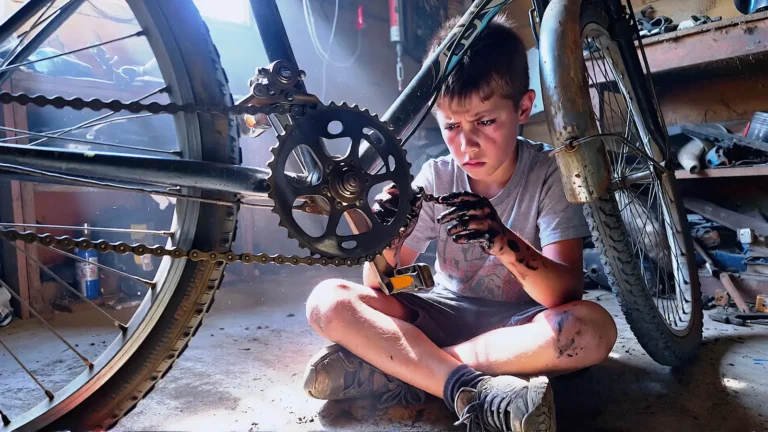
The Fortress of the Hearth: Why the Nuclear Family is the Last Line of Defence
They call it outdated. The data calls it essential. Why the nuclear family is the only thing standing between us and total social collapse.

This post may contain affiliate links. If you make a purchase through these links, we may earn a commission at no additional cost to you.
The nuclear family remains the most effective economic and social unit for stability. ONS and CSJ data confirm that despite cultural shifts, two-parent households consistently produce better educational outcomes and lower poverty rates, serving as a primary buffer against state dependence.
They tell you the nuclear family is an outdated relic. They call it a “heteronormative cage” or a historical blip from the 1950s that we’ve happily outgrown. You see the think pieces in the Sunday supplements, written by people with double-barrelled surnames and trust funds, assuring you that “family is whatever you make it.”
It sounds lovely. It sounds liberating. But let’s look at the mortar holding the bricks of this country together. When you strip away the sociology lectures and look at the cold, hard numbers, you realise that the nuclear family isn’t a lifestyle choice. It is the primary engine of stability, wealth generation, and mental health in the United Kingdom.
We’re dismantling the hull of the ship while we’re still at sea, and then wondering why we’re taking on water.
The Ledger of Broken Homes
Let’s put aside the moralising and look at the balance sheet. A society is, effectively, a massive logistical operation. How do we raise competent adults? How do we care for the elderly? How do we generate security?
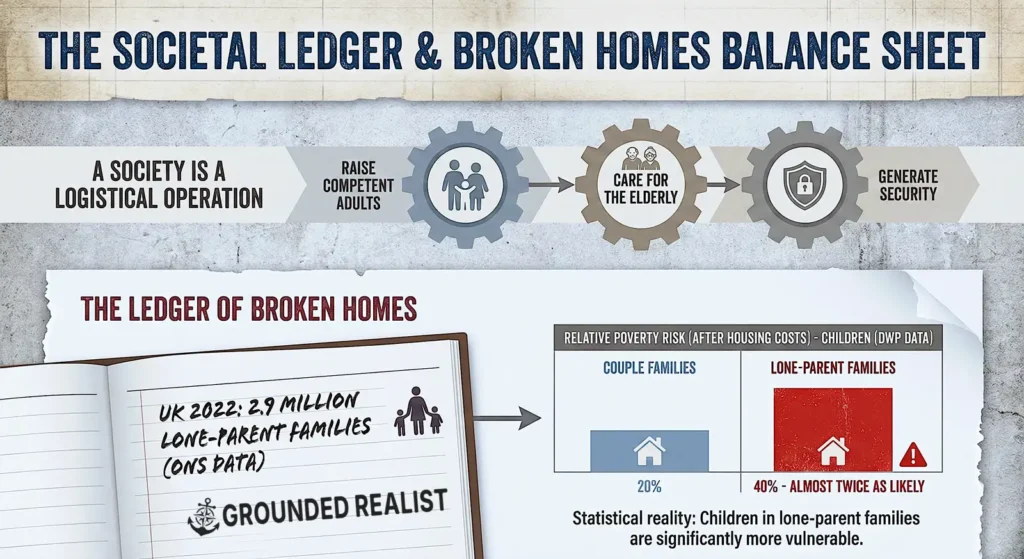
The Office for National Statistics (ONS) paints a stark picture. In 2022, there were 2.9 million lone-parent families in the UK. While many single parents are nothing short of heroic, grinding themselves to dust to provide, the statistical reality is unforgiving. According to data from the Department for Work and Pensions, children in lone-parent families are almost twice as likely to be in relative poverty after housing costs compared to those in couple families.
That isn’t just a “money problem.” That is a life-chance problem.
The Centre for Social Justice (CSJ) released a report, “Family Structure Still Matters,” which provides the receipts we cannot ignore. Their analysis of Millennium Cohort Study data shows that even when you control for income and education, children from stable two-parent families are less likely to be suspended from school and less likely to have contact with the police.
We’re talking about the difference between a child contributing to the Exchequer and a child becoming a ward of the state.
The Economic Vandalism of the Tax Code
So, if the stable family unit is the bedrock of a functioning society, surely His Majesty’s Government is doing everything to support it?
Hardly. The UK tax system is hostile to the single-earner family. We have an individualised tax system that ignores the household unit. Take a family with one earner on £50,000 and a stay-at-home parent. They pay significantly more tax and lose child benefit sooner than a couple earning £25,000 each—despite the total household income being identical.
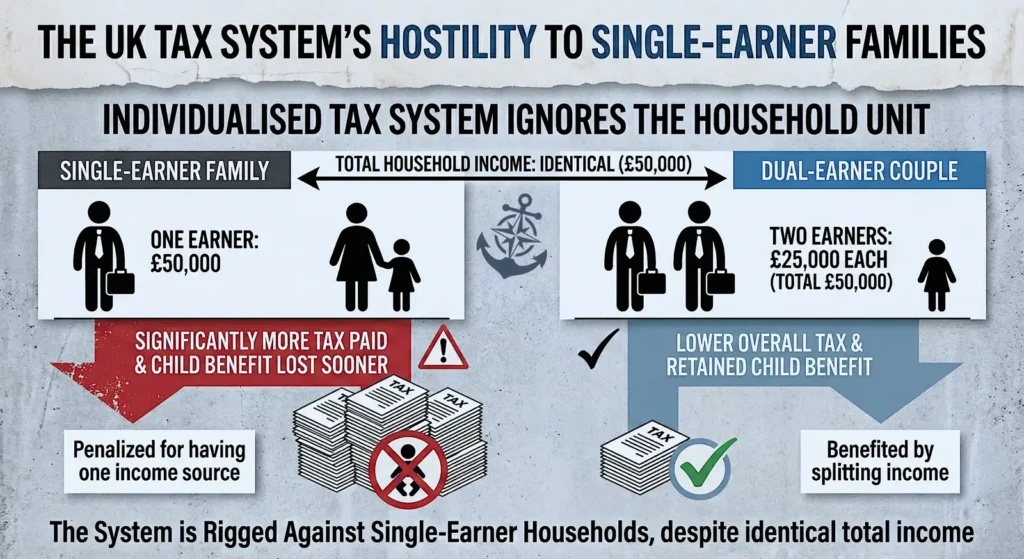
We’re effectively fining parents for choosing to have one person keep the home fires burning. We’ve turned raising the next generation into a luxury good, affordable only to the very rich or the very subsidised.
“It Takes a Village”
Now, I can hear the critics in the gallery. They say, “But the nuclear family is isolating! Historically, we lived in extended tribes. We need a village, not a walled garden.”
There is truth in the history, but deception in the application. Yes, the extended family of grandparents, aunts, cousins is vital. I’m a traditionalist; I want the clan around the Sunday roast. But a village is not a substitute for a father and a mother; a village is the support structure for them.
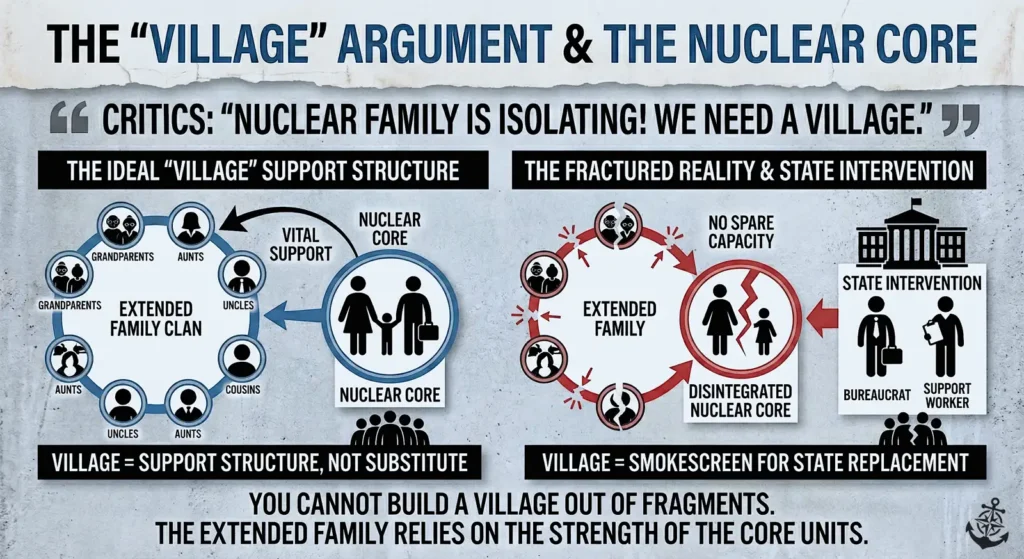
You cannot build a village out of fragments. The extended family relies on the strength of the core units. If the nuclear core disintegrates, there are no aunties or grandads with the spare capacity to help, because they’re too busy picking up the pieces of their own fractured lives. The “village” argument is often a smokescreen for state intervention, replacing the father with a bureaucrat and the mother with a support worker.
The Brass Tacks: What We Do
We stop apologising for what works. We stop pretending that all structures yield equal outcomes. They don’t.
The Policy Fix: We need an immediate overhaul of the tax code to recognise the household as the taxable entity, similar to the “quotient familial” system in France or the income splitting in Germany. Allow fully transferable tax allowances between spouses. If a mother or father stays home to raise the future citizens of this country, their labour should be recognised, not penalised.
The Marching Orders: This starts in your kitchen.
- Eat Together: It sounds trivial, but it’s foundational. No phones. No telly. Just food and conversation. It’s the boardroom of the family.
- Audit Your Spending: Stop buying plastic junk from overseas that funds the very systems undermining your economy. Spend that money on time. If you can downsize to a smaller house or an older car to allow one parent to work less and parent more, do it.
- Gatekeep Your Home: You are the filter. Don’t let the toxic sludge of algorithm-driven media raise your children. That is your job.
The storm is outside. Make sure the roof is tight.